Search This Blog

Showing posts with label Italian Cypress. Show all posts

Tuesday, November 25, 2014

Cupressus sempervirens 'Stricta' - Italian Cypress

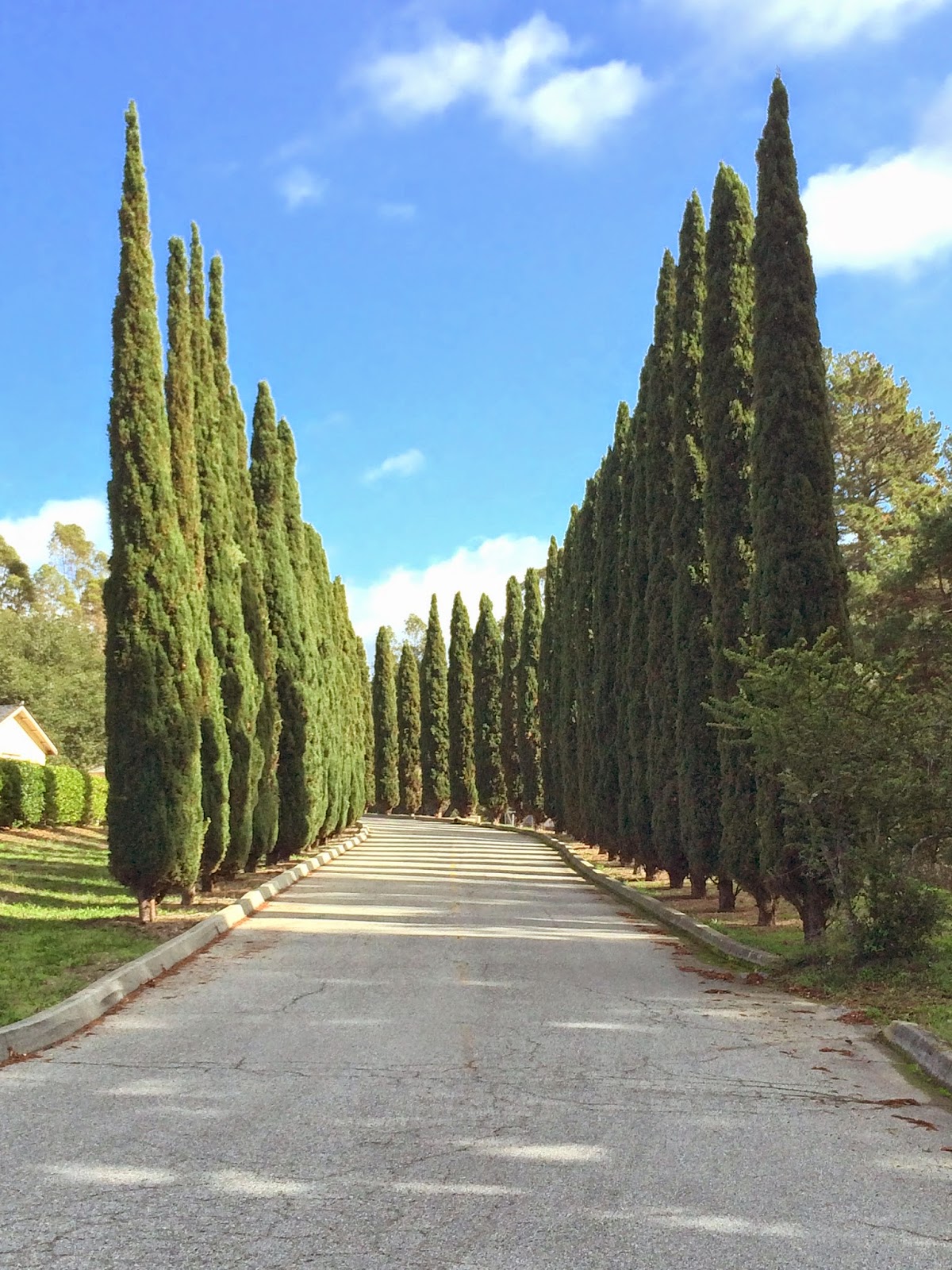
The Italian Cypress is a narrow, upright, tight growing tree that's been planted in gardens for hundreds of years.  This is a popular cultivar 'Stricta', one of several upright very narrow forms available in the trade. Trees are used to direct the eye in formal landscapes. Trees grow 20-40' tall x 3' wide, narrowing to a point at the top. I have seen them used as hedges, but its a lot of trees and they don't spread very widely, I think I would choose the species for that use. Gilman and Watson called them green telephone poles. I have seen them called Pencil Pines, but I don't think that's a popular common name around here.


Foliage is scale-like, medium green, very small, in pairs, lasting 3 or so years before falling to reveal the brown stem.  The branch sprays are rounded and held upright.


Reproductive structures are stroboli. Male are small, you can see them in the above picture at the tips of some of the branches. Females are also small, as seen below.


Cones are woody, dry, oblong, about an inch, generally not longer, with peltate scales, soccer ball like. Saw a website that called the cones "Ugly Nuts".


The taxonomy on this plant confuses me. Is there really a 'Stricta' cultivar? I have seen 'Glauca' used, and we have a 'Swains Golden' in the backyard of a neighbor but I am not sure what to make of the classic Italian cypress. Cal Poly suggests this is a naturally occurring botanical variety and should be called Cupressus sempervirens var. stricta

The specific epithet sempervirens means evergreen. All Cupressus are evergreen. Seems odd.

Misidentifiaction: If you are looking at the plant, not likely to be missed, but if you only have a twig, bummer. Determine it is a Cupressus, most have more or less rounded stems and most have the branchlets radiating out in all directions rather than flattened sprays. Differs from the species by being much more narrow.

Location:
Corralittos
114 Eureka Canyon Rd, as seen in the top picture.

Thursday, January 19, 2012

Cupressus sempervirens - Italian Cypress

The classic Italian Cypress is a narrow upright tight growing tree thats been planted for ever. Used to direct the eye in old formal landscapes. There is a popular cultivar called 'Stricta' which is about the only one being planted now a days.  


Used as a screen or hedge.


The classic gardens in Italy, such as Boboli Garden in Florence and Villa Adriana outside of Rome, planted them over 400 years ago for the same reason we plant them now, they provided a strong vertical accent that allowed the designer to focus the viewers eye. At Boboli Gardens it was to make the garden visitor look towards the house.


At Villa Adriana they did the same but with fewer plants, just being the frame of the picture.


Few of the species are planted anymore, most of the time people plant the narrow cultivar 'Stricta'.


Foliage is scale-like, medium green, very small and in pairs, lasting 3 or so years before falling and showing the brown stem.  The branch sprays are rounded and generally very held upright.


Reproductive structures are stroboli, forming cones when fertilized. Male are small, you can see them in the above picture at the tips of some of the branches. Females are also small, as seen below.


Cones are woody, dry, oblong, about an inch, generally not longer, with peltate scales, soccer ball like.


Misidentifiaction: If you are looking at the plant, not likely to be missed,  but if you only have a twig, bummer. Determine it is a Cupressus, most have more or less rounded stems and most have the branchlets radiating out in all directions rather than flattened sprays. I did say most.

If its blue its the Arizona cypress, if the cones are larger than an inch it is likely the Monterey cypress, if its green, no cones and no plant to look at, punt.

Location:
Aptos
There is a nice planting at the corner of Alturas Way and Cabrillo College Drive on the north side of Park.