Search This Blog

Showing posts with label weedy. Show all posts

Tuesday, July 28, 2026

Populus tremuloides - Quaking Aspen

I was a bit surprised to see a Quaking Aspen here in Santa Cruz. Also a bit disappointed, they are adapted to growing from one plant into hundreds. Pando, is a grove of Quaking Aspen in Utah that is considered to be one of the largest organisms on earth. The grove is one clone, connected to 47,000 trees by roots (suckering) and covers over 100 acres and is considered to be over 1000 years old. Think what it can and will do in your yard.

They are medium sized trees, 20-50' with an upright narrowish crown. Where there is one…..


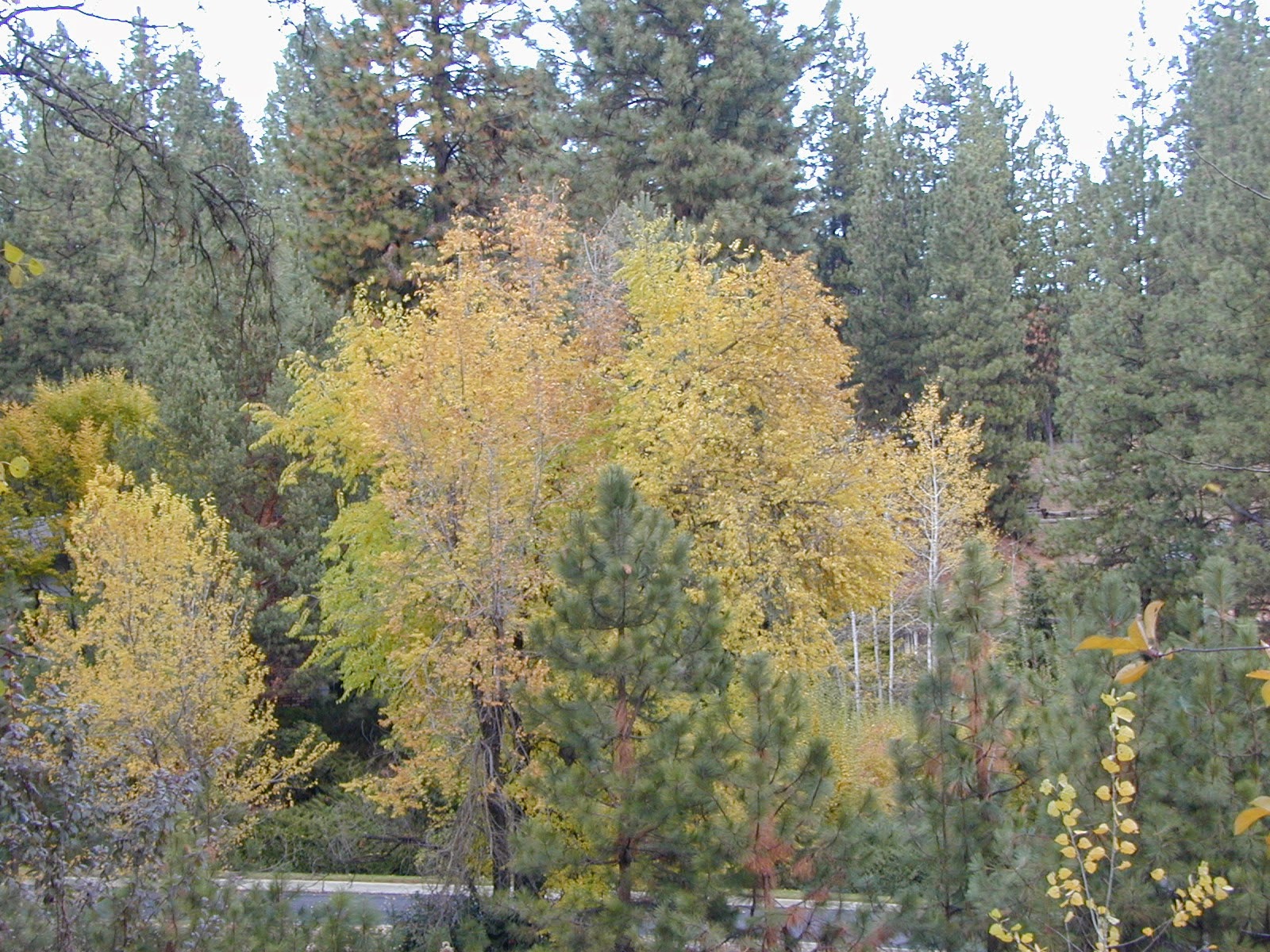
Having seen many planting of Quaking Aspen in Spokane, I quickly came to the conclusion that this is a beautiful tree in the fall or windy, with rustling foliage They are very short lived. Luckily (?), but when one dies hundreds show up.


Leaves are alternate, simple, ovate to triangular, slightly crenated margins, dark green in summer, turning a beautiful gold in fall. Like many poplars, they have a flattened petiole, which causes the leaf to flutter or quake in any light breeze. (The doctrine of signatures suggested that this plant was the cure to shaking palsy.)


Trees are dioecious, male and female plants. Males in long catkins.

Stems are smooth, with a large terminal bud.


And the bark is one of the reasons people like it. Silver, smooth with dark branch collars.


And best of all is the fall color. Bright yellow to yellowish orange.


Misidentification:
Other poplars, perhaps. You are not likely to encounter P. tremula in SC but if you are reading this from colder climates you might encounter a columnar form.

Location:
Capitola 
301 Fanmar. Pretty sad looking specimen. 

Sunday, March 15, 2015

Paraserianthes lophantha lophantha - Plume Albizia

I rarely see Plume albizia used intentionally as a landscape plant. Most of the specimens I see are along the highway as escaped specimens growing with Acacia. These are small trees growing to 15' with a slightly narrower spread, with greenish yellow flowers. Most commonly seen on Highway 1 heading south between Larkin Valley Rd and Buena Vista Rd in the medium. This name is new to me. I was taught the old name, Albizia distachya.


Leaves are deciduous to partly evergreen, alternate, bipinnately compound, 6-12" long, containing 7-14 pairs of compound leaflets, each leaflet with up to 40 or so tiny 3/8" long, linear to oblong leaflets with entire margins, and a small pointed tip. There is a gland on the petiole. Leaves usually glabrous, but occasionally with some small hairs.


Leaflets are about 3/8" long.


Flowers early winter to mid winter around SC. Numerous greenish yellow flowers are grouped in 4-6" long elongated clusters.  Most of the show are the stamens.


Fruit is a pod, 3-4" long, flat, drying reddish brown. Shiny black flattened seeds.


Stems slightly hairy.


Synonyms
Albizia distachya
Albizia lophantha

Misidentification:
Albiza julibrissin is similar in foliage but the flower color and arrangement of the flowers is very different.

Location:
Aptos
Highway 1 heading south between Larkin Valley Rd and Buena Vista Rd in the medium.

Santa Cruz
802 Fair St on the Handley St. side of the house.

Saturday, August 2, 2014

Ulmus pumila - SIberian Elm

The Siberian Elm is a very common elm in many parts of the country, and pretty common here. They are exceptionally hardy, weedy, brittle, usually with some dead wood, but easy to grow. They are medium to large deciduous trees with a fast growth rate to 50-60' forming a broad upright habit with several strong primary lateral branches.


Leaves are deciduous, simple, alternately arranged, 2-3" long (hence the pumila = small) elliptical to oblong or ovate shaped, with singly serrated margins, medium green upper surface, lighter below. Unlike many elms the leaf base is more or less symmetrical. Fall color usually yellow, but may see a little red here and there. Often no fall color at all.


Terminal stems are thin, resulting in a slightly weeping habit of the fine branching.


These are flower buds, rounded, while the vegetative buds are tiny. Small red flowers in the spring.


Fruit is a flatten samara, about the size of a dime, thin papery with the seed more or less in the middle.


Bark is rough, platy, gray and dark gray to black.


An ever so common sight on these elms is the constant leaking for ooze from wounds or natural cracks. Bacterial wetwood.


Fall color up in the PNW.


Misidentification:
Ulmus parvifolia is commonly confused with this, though several distinct difference are quite obvious. The bark for one, flowering season - this one blooms in spring, and the growth habit - this one is larger, and not as layered as U. parvifolia.

Location:
Aptos
309 and 311 Spreckels Dr.

Santa Cruz
Nice one at the Cemetery on Ocean Street Extension is in the first picture.


Saturday, July 19, 2014

Ailanthus altissima - Tree of Heaven

The tree of heaven, what a funny name and I suspect that most horticulturalist think it might be from that other area. Very fast growing, 50+ feet in cultivation. Can actually look pretty nice but often it's lopsided. Weak wooded and weedy to boot. This is the tree that grew in NY city, in the sidewalk cracks. 


Leaves are deciduous, pinnately compound, 1-2' long, with 11-25+ ovate to lanceolate 1-2" long leaflets have entire margins except for a couple of teeth at the base and a distinct gland on one of the teeth. Leaves are dark green with a whitish underside. 


Distinct gland on the one side of the leaf base.


Trees are dioecious, male and female trees. Small yellowish green flowers in the spring. Male flowers smell bad when open. 


Bark is smooth when younger but developing shallow fissures. Stems are thick, reddish colored and have heart shaped leaf scars. 


The fruit found on females only is a samara, about 1" long and is twisted so it spins when it drops to the ground. The female trees look their best when covered with red fruit.


Misidentification:
Perhaps Koelreuteria, either can have similar looking foliage.
A reader suggested Rhus typhina as well. I agree, we don't see them here but in colder climates for sure. Rhus typhina has very hairy stems and more deeply dissected leaf margins. Attractive plant in the fall. 

Location:
Aptos
Soquel Dr at Capitola Rd Empty lot

Santa Cruz
Some on Chestnut heading up the hill toward Mission, no address, just in the wild area there.

Watsonville
121 Carey Rd. (corner of Carey and GreenValley Rd)