Search This Blog

Showing posts with label white flowers. Show all posts

Tuesday, May 26, 2026

Agonis flexuosa 'Burgundy' - Burgundy Peppermint Willow

This is a newer cultivar of the Australian Willow and seems to develop a fuller canopy than the dark purple 'Jervis Bay Afterdark' which has been planted all over town. Reported to grow to 25' by about 15' wide with a weeping habit. One issue I have seen is the very narrow crotch angle formed on the trunk which might be a structural issue as the trees mature.


A nice specimen at Sierra Azul Nursery in Watsonville.


The new leaves come out in early spring with a beautiful burgundy color. The color fades by the end of winter but the new foliage comes out quickly with another flush of color.


This is the issue I see with all of the trees I have seen. The trunk splits into two co-dominate leaders with a very narrow crotch angle. As those stems increase in diameter they will push the other away and eventually split.


Misidentification:
Not sure what you might think it is.

Location:
Aptos

280 Baltusrol Dr


Santa Cruz
36 Rockview Drive

Watsonville 
Sierra Azul Nursery

Tuesday, July 28, 2015

Chrysolepis chrysophylla - Golden Chinqapin

This tree was totally new to me. I was out of my truck collecting some knobcone pine cones on Empire Grade that came down in a storm and I see this dark leaved tree with chestnut fruit. I look up for a chestnut tree but there wasn't one. And the fruit were attached. Okay, not hard to figure out what it is once I get home. The Golden Chinqapin is a relative of the chestnut (Castanea) but has male and female flowers in the same inflorescence. This is could be the botanical variety, Chrysolepis chrysophylla var Minor. Trees growing on poor soils, reaching 30 feet or less.


Leaves are evergreen, simple, alternate, lanceolate to narrowly elliptical, 2-5" long, folding upward along the main vein, boat keel like, about 1" wide, dark green upper surface and a golden lower surface.


Plants are monoecous, males at the ends of the catkins. Male flowers creamy white at the ends of the branches forming in middle summer, July here.


Male flowers at the ends or in this picture, at the top of the inflorescence and the females near the bottom.  Looks like my deck needs painting…..


 Really, red berries? Nope, galls formed by the Chinquapin Flower Wasp.


Fruit is a nut, enclosed in a spiny husk (cupule = cup-like structure like those surrounding the base of an acorn), very much like that of a chestnut. These are three-angled to round, but caught a nice triangular one,


Spins on the outer husk variously branched and very sharp. One distinction between this and a chestnut is that there are separations between each of the 3 nuts.


Here is the fruit on the left with a chestnut on the right.


Stems yellowish turning red, yellow star shape pith.


Bark smooth when young, developing over time to become deeply furrowed.


Synonyms: Castanopsis chrysophylla

Misidentification:
A chestnut due to the fruit, but the leaves look totally different.

Location:
Santa Cruz
5187 Empire Grade

Sunday, July 26, 2015

Leptospermum 'Dark Shadows' - Dark Shadows Leptospermum

Leptospermum 'Dark Shadows' is a nice compact small evergreen tree or large shrub with purple foliage reaching 15 feet tall and 20 feet wide. Another nice dark foliaged tree for contrast in the landscape. From my observations, the plants seem to be almost as wide as tall and multi-stemmed forming a upright spreading habit. 


Leaves are alternate, simple, narrowly lanceolate, about an inch long, mostly purplish color but those in the inner canopy are more green and new ones are more red. Leaves covered with long silver hairs.


Flowers are white, borne in summer, about 3/4" in diameter and contrast very nicely with the flush of new foliage.


Fruit is a small capsule with 5 valves when open.


Misidentification:
Agonis flexuosa 'Jervis After Dark' perhaps?

Location:
Aptos 
455 Sandlewood Dr

Sambucus mexicana - Blue Elderberry

A California native deciduous shrub or tree growing 15-25' tall forming an irregularly rounded to spreading form with multiple stems arising from an older trunk. Old trees have thick trunks but the wood making up the canopy is usually fairly young as suckers arise along the trunk or flat lying branches. Usually found near water, but seems to be pretty tolerant of dry soils.


Leaves are deciduous, opposite, pinnately compound, 6-12" long, with 5-7 lanceolate to narrowly ovate leaflets with serrated margins and noticeable unequal leaf bases. Leaflets are about 2-4" long and about 1" wide, and medium green. Trees growing with little water have smaller leaves that are often curled.


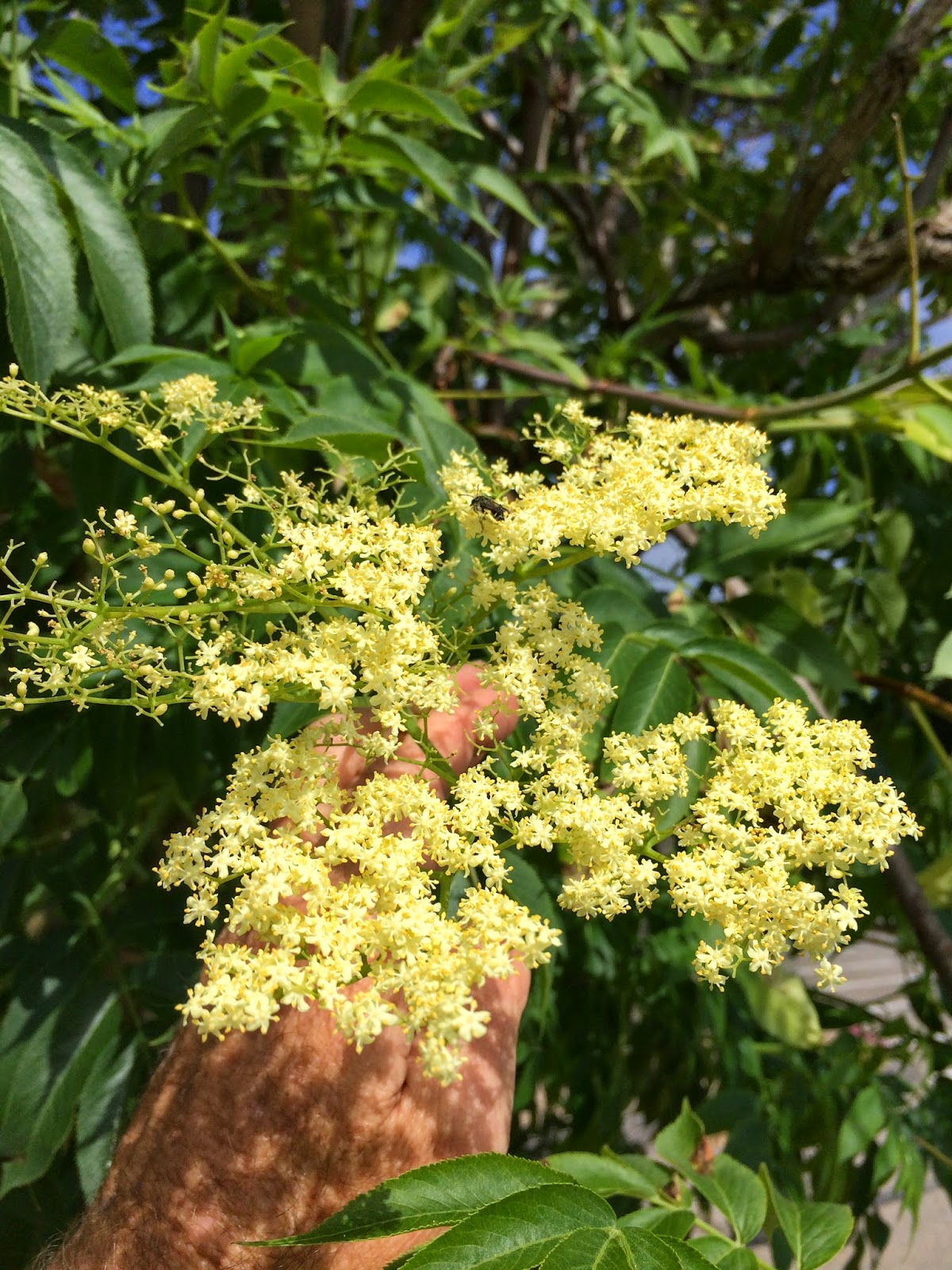
Flowers yellowish white, in a flat topped cyme. Individually small, but in large quantities making a nice display.


Fruit is blue when ripe, 3/8' diameter, sometimes with a distinct waxy covering. Infructescence gets very heavy and hang when fruit is ripe.


Young stems are bright green with orangish lenticels. Suckers can be very thick and grow very rapidly.


Bark on older trees is ridged, reddish brown in color.


I learned this plant as Sambucus caerulea back in the day, and will always recall seeing them all over Pullman WA and "getting" the caerulea part due to the fruit color. Also called S. mexicana caerulea or S. nigra cerulean.

Misidentification:
Not hard to identify, suckering habit, unequal leaflet bases, blue fruit.

Location:
Just about everywhere you find native plants growing.

Aptos
Nisene Marks all over the road prior to the pay station,
502 Loma Prieta Dr. 

Saturday, May 23, 2015

Eucalyptus leucoxylon - White Ironbark

The white ironbark is a beautiful evergreen tree from Australia growing 30-90' in their native habitat and depending on the botanical variety. Most are upright with spreading branches with weeping smaller branches. According to some experts, the most popular variety has red or pink flowers. Ours seem to be of the white variety, Eucalyptus leucoxylon var. connata.


Leaves are evergreen, alternate, simple, lanceolate to slightly falcate, 4-6" long, pendulous with both surfaces the same.


Flowers off white though many images show red. All stamens. Flower buds with a long pointed cap, which you can see on the lowest flower. Inflorescence with 3 flowers.


Fruit is a small urn shaped capsule, with the valves hidden below the lip.


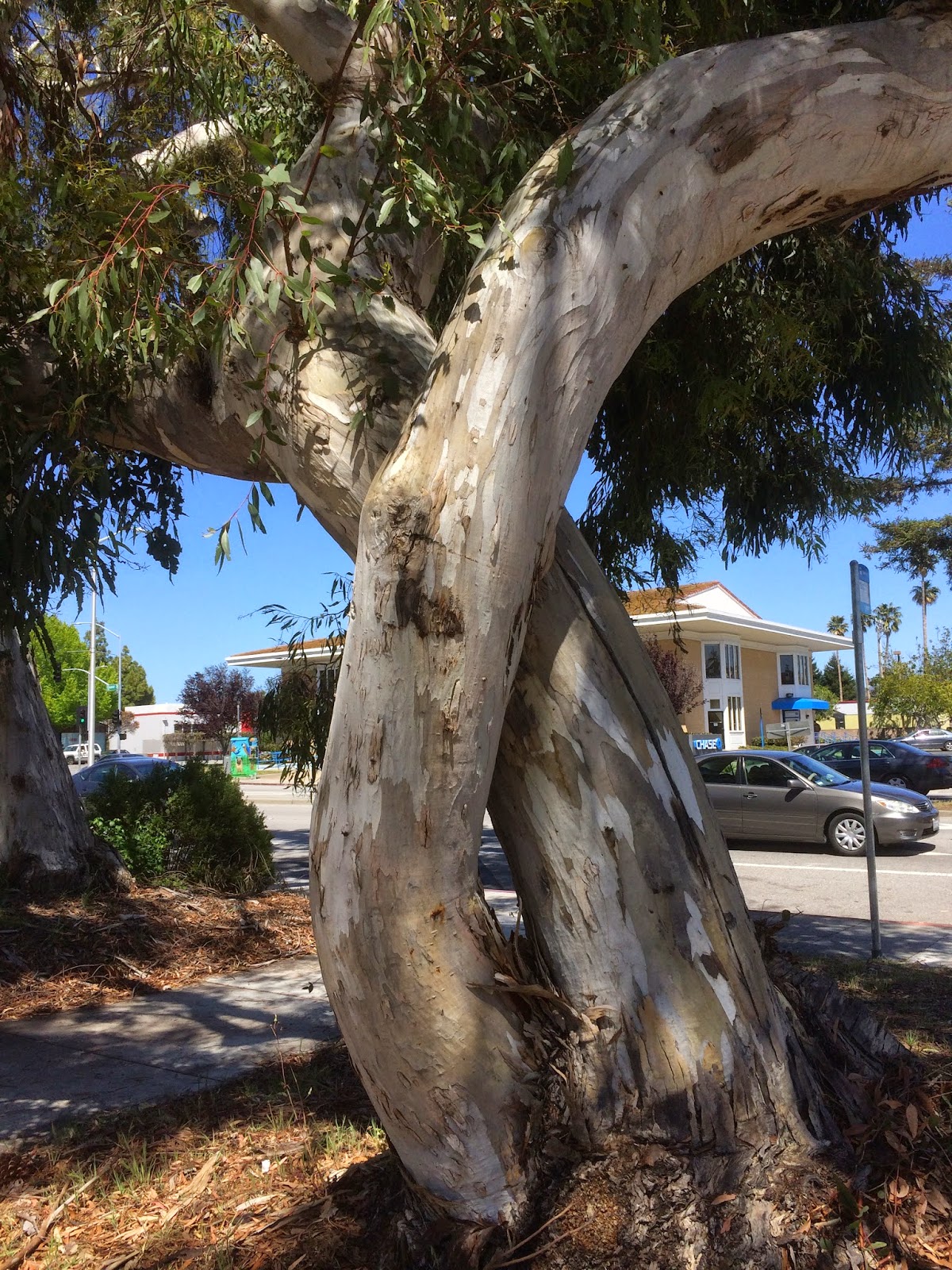
Bark is beautiful, retained near the base, but exfoliating above. Younger stems mottled.


Misidentification:
Any white flowered Euc, look at the fruit, 3 flowers per cluster and the bark on younger branches.

Location
Santa Cruz
Ocean St at the county court house, hasn't everyone been there?

Fraxinus ornus - Flowering Ash

The Flowering ash or sometimes called the Manna ash is a small to medium sized deciduous tree growing 25-50' with a spreading habit. Most literature suggests they are small trees in their native habitat of Spain. Not a great shot below, nor a great specimen being pruned by highway crews, but for now it's all I have.


Leaves deciduous, opposite, pinnately compound, 8-12" long, with 7-9 leaflets. Each leaflet about 2-3" long, medium green, oblong except the terminal which is a bit wider, margins serrated, cuneate base and acuminate tip, lower surface lighter green. Known to have weak reddish fall color, but having just stumbled on this one specimen, I have not seen the fall color.


Flowers creamy yellow in mass but more or less white close up. Trees are androdioecious, new term for me, where plants can produce perfect flowers or they can produce only male flowers. Then again I read that they might not be "functionally" androdioecious?? The flowers are borne in very showy panicles emerging with the spring foliage, males with two stamens, four white strap-like petals and fragrant. They have the typical privet smell.


Fruit is a narrow samara typical of ash trees.


Terminal bud is large, dull brown, many other Ash trees are copper colored buds. Leaf scars are pretty small and more or less flat topped.


Misidentification:
Any other ash tree if not in bloom. Actually, I drive by the specimen almost every day on the freeway and I suspect I thought it was a Sambucus but the other day it just looked different to me so I went back to look. Flowers in May, looking a lot like Chionanthus flowers. Foliage is slightly different that others around here, the terminal is quite broad and the terminal buds are large and dull brown.


Location:
Aptos
9057 Soquel Dr. Really across the street at the bus stop.

Strelitzia nicolai - White Bird of Paradise

The White Bird of Paradise is usually planted to create a tropical feel in the garden with it's large banana like leaves. They are upright growing monocots on "woody" stems with the foliage clustered at the tips. Plants sucker at the base and can spread as wide as they grow tall.


Leaves are evergreen, banana-like, 5-8' long, about 12-16" wide, grayish green. Leaves get shredded along those veins running from the central to the margins. I like the edges of the petioles.


We often think of monocots having parallel venation, and they do, but they also have leaves like these where the veins seem to be in a pinnate venation pattern like a dicot. Well, they are. Kew Gardens says they are "pinnate with parallel-arching", while others call this penni-parallel venation.


Stems are eventually exposed when the older leaves fall off.


Flowers are strange indeed. They are cluster in a very complex inflorescence with a bluish boat shaped bract from which the individual flowers arise. Each flower has three free white steals and two fused petals and a purplish bit enclosing all the reproductive parts.


It took me years to "see" the bird in these flowers, not sure why but one day it just jumped out at me.

Misidentification:
I have read they are somewhat triangular resembling the Traveller's Tree, Ravenala, I wish, wow, what a plant that is.


Bananas?

Location:
Aptos
537 Humes Ave

Santa Cruz
302 Oceanview Ave
603 Washington St.